
When Ari Ne’eman looks backs on the autism diagnosis he received at age twelve, he remembers it as “negative and frightening.” Though initially he had not viewed autism that way, interactions with the neurotypical individuals around him quickly distorted the way he viewed his diagnosis. As Ne’eman grew older, however, he began connecting with other autistic […]
Archives for March 2018
Neurodiversity Advocates: Jim SInclair
March 30, 2018 by · Leave a Comment
Advocacy has changed a lot over the past few decades, especially when it comes to the topic of neurodiversity. Jim Sinclair was one of the earliest activists advocating for autistic people. He co-created one of the first websites that focused on autism, the spectrum and giving people information about it. The website, Autism Network International allowed […]
Neurodiversity Advocates: Steve Silberman
March 30, 2018 by · 2 Comments

While some advocate by lobbying their congressmen, or asking for meetings with industry-leading executives, one neurodiversity advocate has done so by an entire different means: the power of the pen. Through numerous essays, interviews, and an adamancy that neurodiverse individuals should be embraced from unique gifts, Steve Silberman has become one of the leading authors […]
Falling in Love with Autism: Online
March 30, 2018 by · 1 Comment

Over the course of the past few decades, the online dating world has expanded exponentially and thrived with new technology and the Internet. Some of the recent popular sites, such as “Match.com” and “eHarmony,” have become highly successful. Specialized dating sites also emerged based on different groups with common interests, such as “Christian Mingle” for […]
Neurodiversity Advocates: Christopher Ulmer & Special Books for Special Kids
March 29, 2018 by · 1 Comment

As I scrolled through Instagram’s ‘explore’ feature earlier this year, I stumbled across a very special video. In it, a young child with special needs was being interviewed. The questions ranged from what he would like people to say when they meet him to what is the best part about being him. I was intrigued, […]
Falling in Love with Autism: Sensory Overload
March 28, 2018 by · Leave a Comment

Contrary to the misconception that autistic individuals are not able to have successful romantic relationships, many individuals with ASD are in long-term relationships. However, there are several difficulties autistic people face when having and sustaining these relationships. Psychologist Kirsty Kerr addresses some of these difficulties in her article “Romantic Relationships and Autism Spectrum Disorder.” These […]
Comorbidity in Adolescence: ASD and Anxiety
March 16, 2018 by · 1 Comment
More often than not, a diagnosis of autism will be followed by a second diagnosis. The incidence of comorbid conditions with autism is 70%, according to one study following autistic children ages 10 to 14 (Smirnoff et al, 2008). The study found that the most common comorbidity was anxiety, which affected thirty percent of children […]
Comorbidity in Adolescence: ASD and Depression
March 15, 2018 by · 1 Comment

Introduction Diagnosis and treatment of depression in individuals with autism varies from the approach to find and help neurotypicals experiencing depression. A study done at Vanderbilt University with 1272 autistic children found that 20.2% of young adults aged 13-17 with autism also have a depression diagnosis. That is nearly twice the percent of adolescents in […]
Comorbidity in Adolescence: Immune Dysregulation
March 15, 2018 by · Leave a Comment
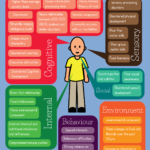
In addition to the psychological comorbidities associated with Autism Spectrum Disorder, studies have shown that there is also a variety of medical comorbidities associated with ASD. Immune dysregulation is perhaps the most widespread of these and has been shown to contribute to an array of immuno-inflammatory diseases, including lupus, MS, celiac disease, inflammatory bowel disease, […]
Comorbidity in Adolescence: ASD and ADHD
March 12, 2018 by · Leave a Comment
Background In the last decade, the field of study regarding the co-occurrence of autism spectrum disorder (ASD) and attention deficit hyperactivity disorder (ADHD) has grown significantly due to the release of the DSM-V in 2013, where a dual diagnosis of these two conditions became possible. Prior to 2013, the DSM-IV said an ASD diagnosis restricted […]