Autism and religion are rarely associated with one another. In a study done at Boston University, individuals with ASD were about 20% less likely than neurotypical people to identify as Christian, approximately 10% more likely to identify as atheist, and nearly 10% more likely to create their own religious belief system. However, the reasons behind […]
Archives for April 2018
Late Diagnosis, Misdiagnosis, No Diagnosis: The Intersection of Sexism and Ableism Towards Autistic Women
April 26, 2018 by · Leave a Comment
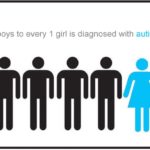
Though autism can affect anyone regardless of sex or gender, an individual’s gender will affect their disorder and how others view it. Sexism against women and ableism (discrimination against the disabled by the non-disabled) are social forces that interact with each other – they are intersectional. Women with autism spectrum disorder (ASD) face challenges that […]
Intersectionality: Race, Socioeconomics, and Autism Spectrum Disorder
April 23, 2018 by · Leave a Comment
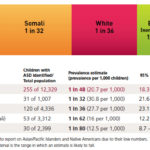
Though ASD is known to occur in children and adults from all backgrounds, there are glaring differences in diagnosis and treatment across racial, ethnic, and socioeconomic groups. In the United States, minority and lower-middle class children are diagnosed later and treated less effectively than wealthy Caucasians, leading to severe disparities in function between ASD children […]
Intersectionality: Autism & LQBTQ+
April 22, 2018 by · Leave a Comment

Living in a world run by social norms, it can be difficult to be a minority in several respects. When an individual belongs to multiple minorities, this can make the world even more confusing. Individuals on the autism spectrum tend to be less receptive of social expectations or constraints, which thereby allows them to be […]
“Treating” Autism: Animal-Assisted Therapy
April 20, 2018 by · 1 Comment
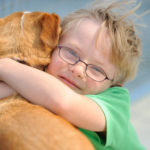
Although every case of autism is unique, many overarching therapies can be used to help autistic children anywhere on the spectrum. A fairly successful therapy called animal-assisted therapy can greatly aid autistic children in overcoming many autistic related obstacles. Animal-assisted therapy is a “treatment” in which autistic children interact with some form of animal which can be […]
“Treating” Autism: Gluten-Free and Casein-Free Diet
April 20, 2018 by · 1 Comment
It is a universal truth that the food we eat has a direct effect on our bodies and, by extension, our behaviors. Everyone has a slightly different diet, which impacts the way they feel and behave. This leads to the idea that food and diet could also be used to help refine or improve our health, […]
“Treating” Autism: Music Therapy
April 20, 2018 by · 2 Comments

Music is a powerful art form. It is something that is enjoyed universally regardless of what background a person comes from. The benefits of music are exceptional, so much so that it is often used as a form of therapy. What is music therapy? It is the therapeutic use of music to treat certain symptoms […]
“Treating” Autism: The Controversy of Applied Behavior Analysis
April 20, 2018 by · 1 Comment

ABA: OVERVIEW AND PROS Applied behavior analysis (ABA), regarded by many to be the most effective evidence-based treatment for autism available, focuses on using techniques of learning that help promote positive behaviors and steer away from harmful or interfering ones. It has been endorsed by federal agencies as a safe and beneficial treatment, and there has […]
ASD in the University: Syracuse University’s ODS Agenda
April 13, 2018 by · 1 Comment
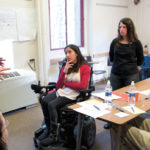
While the transition to a different life at college might be stressful, it can be exponentially more stressful for those who function differently than their neurotypical peers. Autistic students often face social and academic challenges that would not even cross a neurotypical student’s mind. Such challenges for these neurodiverse students include being independent, and planning […]
ASD in the University: Peer Mentoring in GMU’s MASI Program
April 13, 2018 by · 1 Comment
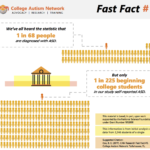
The leap from high school to college is truly a multifaceted transition as students shift both academic and social gears. This time of change can be especially taxing for students with Autism Spectrum Disorder (ASD). Deficits in executive function can make adapting to independent university life challenging. Specifically, problems with planning and mental flexibility can […]